
Hosting 101: Setting Up a Backyard for Late-Summer Entertaining

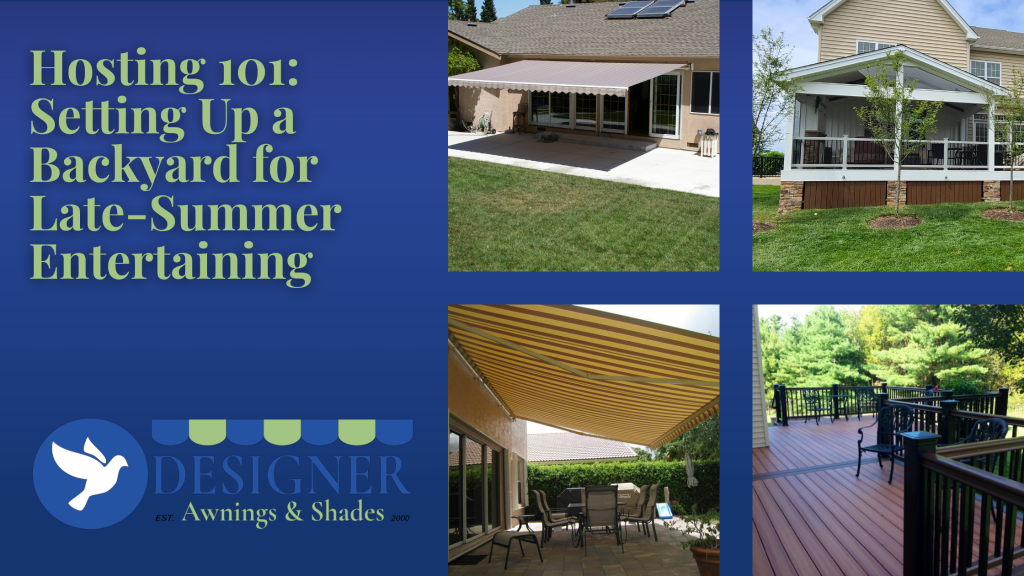
Is your outdoor season already starting to feel like it’s winding down? The calendar says summer’s not quite over, but the evenings are cooling off, bugs are still out in force, and a stiff breeze can turn a nice dinner outside into a reason to head back in. None of that means summer entertaining is over. With the right setup, your backyard patio keeps working for you well into fall.
Homeowners across Allentown, Bethlehem, Easton, and the rest of the Lehigh Valley corridor run into the same seasonal problem every year: the good weather doesn’t disappear all at once, it just gets less predictable. One evening it’s 75 degrees and calm, the next it’s windy enough that napkins fly off the table. A patio that depends on perfect conditions ends up sitting empty more often than it should. The fix isn’t complicated — it’s a combination of the right cover, the right screening, and a few details that make the space comfortable no matter what the thermometer says.
Here’s how to get there.
Start With What You Actually Want From Your Summer Entertaining
Before you add anything, think about how you actually use the space, and how you want to use it once the weather turns. Are you hosting dinners for six, or does a cookout for twenty family members and neighbors happen at least once a season? Are you keeping a fire pit going on cooler nights, or is the goal simpler — a spot to sit outside after work without fighting mosquitoes or feeling a breeze come through the moment the sun goes down?
The setup that makes sense for a big Labor Day cookout is different from what you need for a quiet weeknight on the patio in October, and it’s different again if you’re shading a commercial patio for a restaurant that seats parties outside into the fall. Take stock of the actual footprint too — a compact deck off a kitchen door has different needs than a full backyard patio, and both are within reach since everything from screens to shelters is custom-sized to the space rather than sold in a handful of fixed dimensions. Start with how you use the space, and the rest of the decisions — what to cover, what to screen in, what fabric to pick — get a lot easier.
Give Yourself Weather Protection That Extends the Season
A patio with no overhead cover is at the mercy of whatever the sky decides to do. The Suncover and The Sunplus are courtyard shelters built to change that. The Suncover installs over an existing structure — a patio roof, pergola frame, or similar — so if you already have something up there, it gets reinforced rather than replaced. The Sunplus works differently: it can stand freestanding against a wall, and it comes with integrated rain gutters, which matters more in fall than it does in July, when a passing shower can otherwise mean water running straight off the edge and onto the patio floor below.
Either way, you get real cover from sun, wind, and light rain, which means your outdoor plans stop depending on a perfect forecast. That’s especially useful this time of year in the Lehigh Valley, when a warm afternoon can turn into a cool, damp evening faster than the forecast predicted. A shelter overhead means the fire pit stays lit, the furniture stays dry, and a sudden breeze doesn’t send everyone scrambling indoors halfway through dinner. Both The Suncover and The Sunplus are custom-sized to your patio rather than sold in preset dimensions, so the fit is built around your space instead of the other way around.

Keep Bugs and Wind Out Without Losing the Outdoors
This is where a lot of backyards fall short in the fall. You want the fresh air, but not the gnats, and not a wind that cuts right through a light jacket. This is where one of our retractable screens comes in. The Sentry is a retractable patio screen built with a captured edge rail design, available up to 18 feet wide and 12 feet tall, with mounting options — distance mount, surface mount, inside mount, or recessed mount — to fit how your patio is actually built. It also comes in five frame colors (white, beige, clay, brown, and bronze), so it matches the house instead of standing out against it.
The Sunroll works on a similar principle, using a free-hanging or rod-and-cable system, and it scales up to 20 feet wide and 12 feet tall — useful if you’re screening in a larger porch or a wraparound patio rather than a single opening. It’s available in four frame colors: white, beige, clay, and brown. Both screens retract completely out of the way when you don’t need them, whether that’s a warm afternoon with no bugs in sight or the dead of winter when the patio’s closed up anyway, and both pull back into place in seconds when the mosquitoes show up or the wind kicks up.

The captured edge design on The Sentry is also worth understanding if you’ve dealt with screens before that flap loose in wind or pop out of their track. The edges stay held in the frame rather than free-floating, which is the difference between a screen that holds up through a gusty fall storm and one that needs to be re-hung every few weeks.
Add the Small Touches That Make It Feel Finished
Once the structure and screening are in place, the details are what make people want to stay outside longer. LED lighting extends usable hours into the evening, so the patio doesn’t go dark the moment the sun sets at 7:00 instead of 8:30. My Link lets you control your retractable awning or screen from your phone — handy when a fall shower moves in while you’re not outside to notice, or when you want everything retracted before you leave for work in the morning. Motion sensors take that a step further and retract the awning automatically if the wind picks up while you’re not out there watching it, which matters more in September and October, when gusty weather shows up with less warning than it does in July.
The Sunboot is a smaller but practical add-on — a protective cover that shields a retractable awning or screen when it’s not extended, helping the fabric hold up longer between uses. Taken together, these accessories add up to something worth planning for from the start rather than bolting on later — a multiple channel remote control means one homeowner can operate several awnings or screens from a single device instead of juggling separate remotes for each one, which matters if your setup covers more than one section of the patio.

None of these are required to get a functional setup, but they’re the difference between a patio that’s technically usable and one people actually gather on without someone checking the forecast every hour.
Pick Fabrics That Match How You’ll Use the Space
Screens and shelters both come in a range of fabric options, and it’s worth thinking about more than just color. Solar mesh screening cuts glare and blocks bugs while still letting air through, which matters if you’re using the patio during the day as much as in the evening. For overhead shelters, acrylic fabrics from Staler and Sunbrella hold their color and resist fading, so the setup you install this fall still looks good next summer.
The fabric selection is bigger than most homeowners expect going in — there are over 150 acrylic fabric options for awnings, and more than 190 colorfast acrylic fabrics available for The Sunroll screens specifically. Most of these are solution-dyed, meaning the color is added to the fiber itself before it’s woven rather than applied as a surface coating afterward, which is part of why they hold up under UV exposure and repeated weather instead of fading out after a couple of seasons.
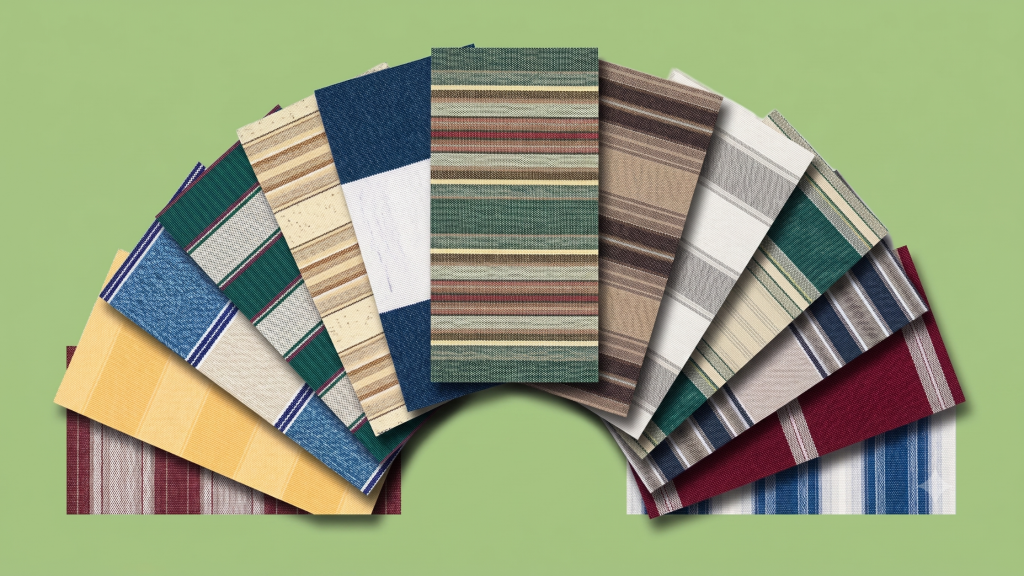
If you’re not sure what fits your space, that’s exactly what the in-home estimate is for — someone walks the fabric options with you in person, against your actual patio, in the light it actually gets, rather than trying to guess from a swatch book or a photo online.
What Actually Happens When You Book a Free In-Home Estimate
A lot of homeowners put off calling because they’re picturing a sales pitch over the phone or a call center reading from a script. That’s not how this works. Every estimate starts with someone coming to your home, measuring the actual space, and talking through what you’re trying to do with it — whether that’s a fully screened-in porch, a shelter over an existing patio roof, or some combination of both. There’s no call center step in between; you’re talking with the person handling your project from the start.
Once you’ve decided on a setup, fall is generally a faster season to get installed than late spring or early summer, when everyone in the Lehigh Valley is trying to get ready for peak patio season at the same time. Turnaround from order to installation typically runs a matter of weeks rather than months, so booking now in September still gives you real use of the space before the weather turns fully cold — and it puts you ahead of the homeowners who wait until the first cold snap to start thinking about it.
Even the best fall setup eventually meets winter. The good news is these are retractable systems, not permanent structures you need to protect against snow load all season. When the weather turns from cool to genuinely cold, screens and shelters retract back into place and stay out of the way until you want them again in spring. That’s part of why installing before winter, rather than waiting for it, is worth it — you get a full fall season of extended use out of the space, and the value isn’t tied to a single weekend of nice weather in October.
A Few Quick Questions Homeowners Ask This Time of Year
Can screens and shelters still be installed before it gets cold? Yes — September and October are typically within the installation window before winter, and getting on the schedule now is what puts you ahead of the fall rush rather than behind it.
Can I add a screen and a shelter at the same time, or does it have to be one or the other? Plenty of homeowners do both — a shelter like The Suncover or The Sunplus overhead, paired with The Sentry or The Sunroll around the sides, so the whole space is covered and enclosed rather than just one or the other.
Do these work on a porch as well as an open patio? Yes. The screens and courtyard shelters are custom-sized to the space, whether that’s an open patio, an existing porch structure, or a deck attached to the house.
Book Your Free In-Home Estimate Before the Weather Turns
We’ve been doing this in Allentown and the Lehigh Valley for over 25 years, and the fall rush always catches a few homeowners who waited too long. Once temperatures drop, everyone wants the same thing at once — a screened, sheltered patio they can still use. Getting on the schedule now means you’re set up before the season really turns, not after. Get your free estimate today!
We serve homeowners and businesses across Berks, Lackawanna, Monroe, Luzerne, Carbon, Northampton, Schuylkill, and Lehigh Counties, and every estimate starts with someone coming to your home to measure and talk through what you actually need — no call centers, no runaround. Whether you’re covering a small deck off the kitchen or a full backyard patio built for entertaining, the goal is the same: a space you can actually use once the weather stops cooperating.